


How Does Material Hardness Really Affect Crusher Selection?
Struggling with crusher selection can be a real headache. You know that picking the wrong machine can lead to sky-high operational costs and constant downtime. I've seen it happen. The key is to start with your material, because a smart crusher selection begins and ends with understanding exactly what you're breaking.
Ultimately, material hardness dictates the type of crusher you need1. For soft to medium-hard rock (<150 MPa) like limestone, an impact crusher is efficient and cost-effective. For very hard, abrasive rock (>150 MPa) like granite or basalt, you must use a jaw crusher for primary and a cone crusher for secondary crushing to avoid excessive wear costs.
Now that you have the short answer, let's get into the details. This isn't just about a simple chart. Choosing the right machine is a risk assessment that saves you a fortune down the line. Let me walk you through how I advise my clients to think about it.
What's the Best Way to Measure Material Hardness?
You're trying to make a huge investment, but you're getting conflicting advice on how to classify your rock. Is it "hard" or "soft"? This confusion can lead to a disastrous crusher selection. The right data will give you the clarity you need to choose confidently.
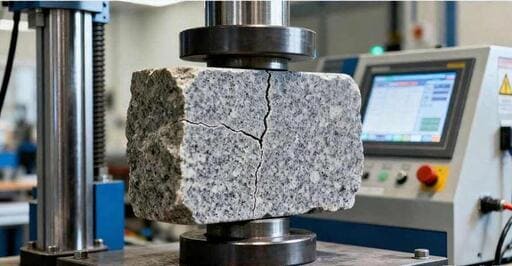
When talking about rock, you’ll hear about Mohs hardness, but for crusher selection, compressive strength is far more practical2. It tells us how much pressure a material can take before it fractures. This is measured in megapascals (MPa).
Whenever someone asks me what machine they need, my first question is always, "What are you crushing?" The budget comes later. The material is everything. I've talked to hundreds of quarry operators and contractors, and the most successful ones know their rock inside and out.
From Lab to Field: Making Sense of MPa
Here’s a simple breakdown I use with my customers. It’s a great starting point for any project.
| Rock Category | Compressive Strength (MPa) | Common Examples |
|---|---|---|
| Soft Rock3 | Below 80 MPa | Limestone, Coal, Clay, Shale |
| Medium-Hard Rock | 80 – 150 MPa | Sandstone, Apatite, softer Granite |
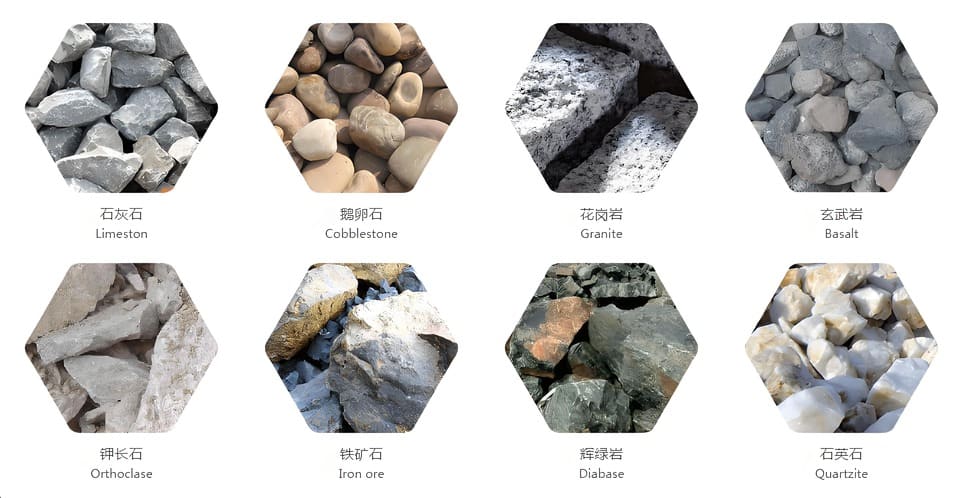
| Hard Rock | Over 150 MPa | Basalt, Granite, River Pebble, Iron Ore, Quartzite |
Think of these numbers as your guide. If you don't have a lab test report for your material, it's one of the best investments you can make before buying a crusher. It takes the guesswork out of the equation and gives you a solid foundation for your crusher selection process. It's not just about hardness, though. Abrasiveness, moisture content, and desired output size are also critical, but compressive strength is where we always start.
Which Crushers Work Best for Soft and Medium-Hard Rock?
You're working with limestone and want a uniform, cubical product for concrete aggregate. You're worried about over-investing in a machine that's too powerful for the job. You need a solution that delivers quality output without breaking the bank.
For soft to medium-hard rock, typically anything under 150 MPa, an impact crusher is almost always the best choice. It produces a superior, cubical-shaped final product and generally has a lower operating cost for these materials.
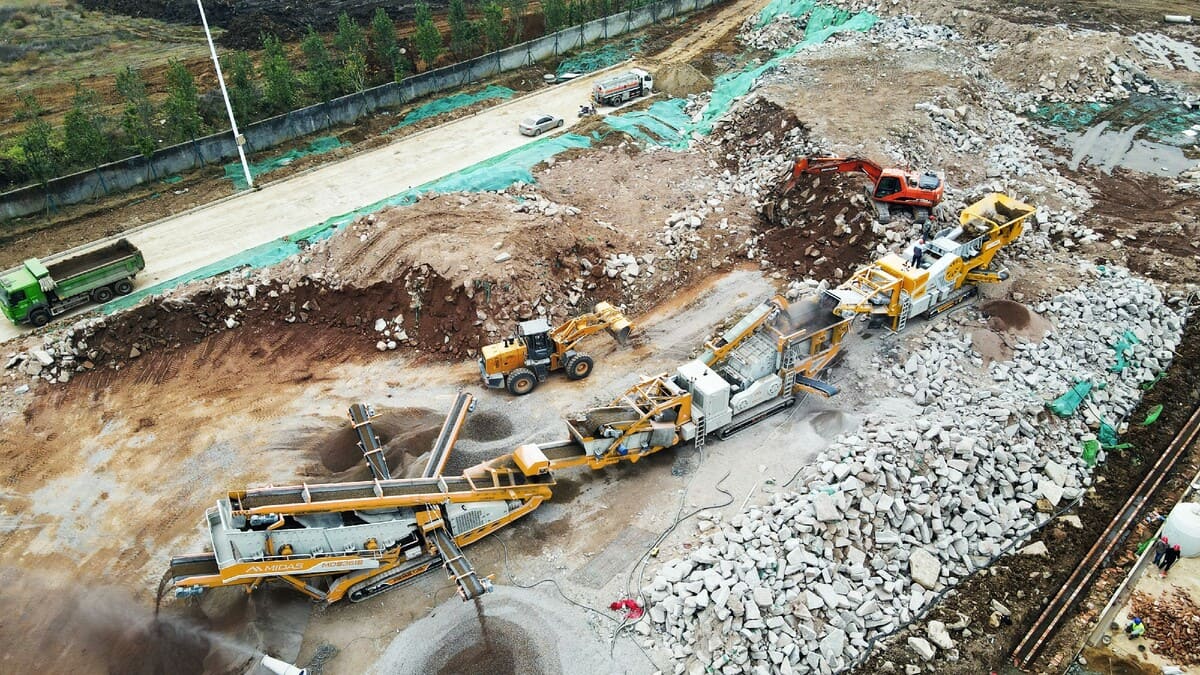
I’ve seen people consider using a heavy-duty jaw or cone crusher for limestone. My advice? Don't do it. It’s like using a sledgehammer to crack a nut. You're paying a premium for performance you simply don't need, which eats into your profits. The impact crusher works by throwing the material against breaker plates, which is perfect for less abrasive rocks. The wear parts, like blow bars, are more affordable and last a reasonable amount of time with softer materials.
For a two-stage process with medium-hard rock, you might use a jaw crusher for primary reduction and then feed it into an impact crusher for the secondary stage. This combination gives you high throughput and excellent particle shape. The key takeaway is simple: for soft materials, an impact crusher is your most profitable tool. It’s efficient, effective, and gets the job done without unnecessary expense.
Why is the Right Crusher Selection So Critical for Hard Rock?
You're trying to crush granite or basalt, and your wear parts costs are out of control. Your impact crusher's blow bars seem to be wearing out in just a few weeks, bringing your entire operation to a halt. This is the most common and costly mistake I see people make.
For hard, abrasive rock over 150 MPa, using a cone crusher for secondary and tertiary crushing is not an option—it is the only sensible choice. The primary stage should always be a robust jaw crusher to handle the large feed size.
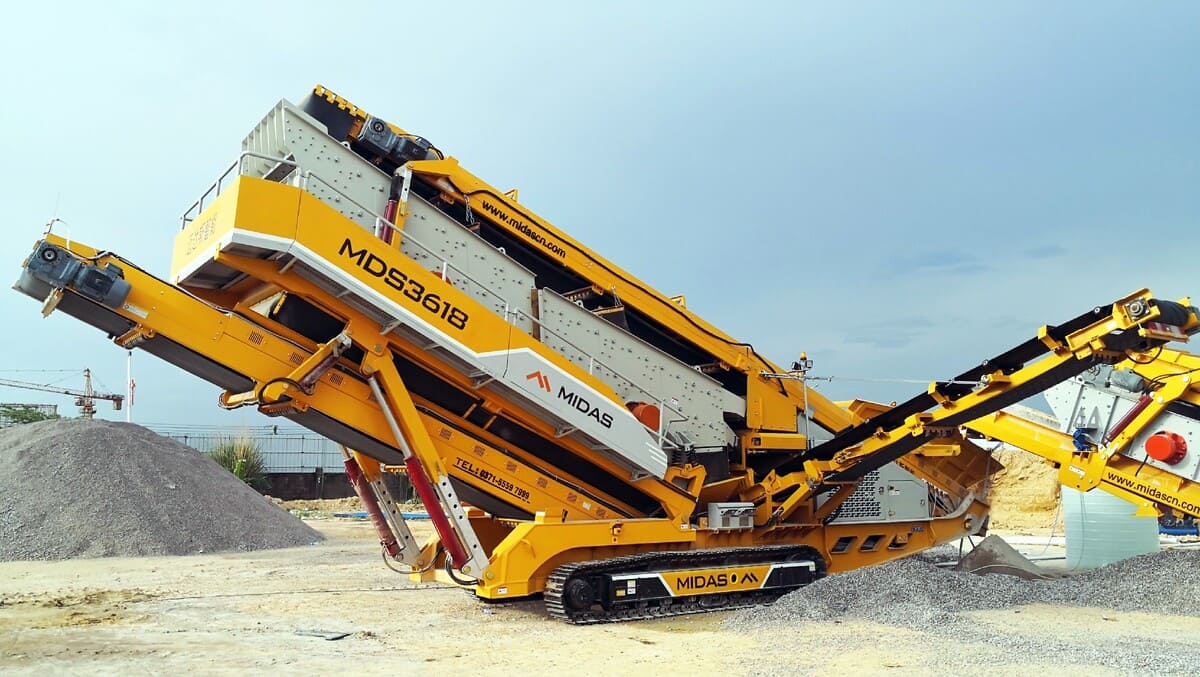
Here is where most people get it wrong. They try to use an impact crusher on high-hardness materials like granite, river pebbles, or iron ore. The result is always the same: catastrophic wear rates. The blow bars, which are the primary wear part in an impactor, will be destroyed in a matter of weeks, not months. The cost of frequent replacement parts and the associated downtime will cripple your profitability. I've run the numbers with clients before, and the long-term cost is staggering.
A cone crusher works through compression4, squeezing the rock between a mantle and a concave. This method is far better suited for hard, abrasive materials. The wear parts are made of high-manganese steel and are designed for these tough applications, lasting much longer and providing a lower cost-per-ton.
So let’s summarize the rule for hard rock:
- Primary Crushing: Always use a jaw crusher.
- Secondary/Tertiary Crushing: Always use a cone crusher.
There are no shortcuts here. Making the right crusher selection for hard rock is the difference between a profitable operation and a money pit.
Frequently Asked Questions
Can I use a cone crusher for soft rock like limestone?
You can, but it's generally not recommended. A cone crusher is over-engineered for soft rock and will likely produce more fine dust than desired. An impact crusher is more cost-effective and produces a better cubical product shape with softer materials.
What is the difference between hardness and abrasiveness5?
Hardness is a material's resistance to being crushed (compressive strength). Abrasiveness is its ability to wear down other surfaces (like your crusher's wear parts). A material can be hard but not very abrasive, or relatively soft but highly abrasive (like some sandstones with high silica content). Both factors are critical for crusher selection.
How important is getting a material test report?
It is extremely important. A professional lab analysis gives you precise data on compressive strength, abrasiveness (like the Abrasivity Index), and mineral content. This report removes all guesswork and is the single best tool for making an informed and low-risk crusher selection.
Conclusion
To wrap it up, the relationship between material hardness and crusher selection is straightforward if you follow one core principle: match the machine to the rock. For soft rock under 150 MPa, an impact crusher offers low costs and great particle shape. For hard, abrasive rock over 150 MPa, a jaw crusher followed by a cone crusher is the only configuration that makes financial sense. Getting this wrong leads to massive wear costs and crippling downtime. Getting it right sets you up for a profitable, efficient operation from day one.
If you're looking to set up a new crushing line or optimize an existing one, my team (MIDAS) and I can help. We specialize in mobile crushing equipment for everything from rock quarrying to construction recycling. Contact us today for a consultation based on your specific material and production goals.
"Mohs Hardness Scale", https://www.nps.gov/articles/mohs-hardness-scale.htm. Mining and engineering handbooks provide guidelines for selecting crushers based on material properties. Compressive strength is a primary factor, with impact crushers generally recommended for softer, less abrasive materials and jaw and cone crushers used for hard, abrasive rock. Evidence role: general_support; source type: education. Supports: The claim that crusher selection is primarily determined by the feed material's compressive strength and abrasiveness, with specific types of crushers being better suited for different hardness ranges.. Scope note: Specific MPa thresholds can vary slightly between sources and depend on other factors like abrasiveness and desired product size. ↩
"Rock mass properties", https://www.rocscience.com/assets/resources/learning/hoek/Practical-Rock-Engineering-Chapter-11-Rock-Mass-Properties.pdf. In mineral processing and civil engineering, Uniaxial Compressive Strength (UCS) is a standard measure of a rock's resistance to crushing forces, making it a direct input for crusher design and selection. Mohs hardness, conversely, measures scratch resistance, which is less relevant to the bulk fracturing mechanics of crushing. Evidence role: mechanism; source type: paper. Supports: The claim that compressive strength is a more relevant metric than Mohs hardness for selecting crushing equipment.. ↩
"Chapter 4: Subsurface Classification", https://www.txdot.gov/manuals/brg/geo_lrfd/chapter-4-.html. Geotechnical and mining engineering sources classify rock based on its Uniaxial Compressive Strength (UCS). While exact values may differ, sources generally categorize rock with UCS below 80-100 MPa as soft to medium, and rock above 150-200 MPa as hard to very hard. Evidence role: general_support; source type: institution. Supports: The classification of rocks into categories like 'soft', 'medium', and 'hard' based on their Uniaxial Compressive Strength (UCS) values.. Scope note: The specific MPa boundaries for each category can vary between different classification systems and standards. ↩
"Cone Crushers Explained", https://savree.com/en/product/cone-crusher. A cone crusher reduces rock by squeezing it between an eccentrically gyrating spindle, which is covered by a wear-resistant mantle, and an enclosing concave hopper. The material is compressed as the gap narrows, causing it to fracture. Evidence role: definition; source type: encyclopedia. Supports: The description of a cone crusher's operating principle.. ↩
"A Critique on the Correlations Between Rock Abrasiveness ...", http://ui.adsabs.harvard.edu/abs/2025RMRE...58.2487H/abstract. Geological and materials testing defines hardness as a material's resistance to deformation or fracture (e.g., compressive strength), while abrasiveness is its capacity to cause wear on other surfaces. Abrasiveness is strongly influenced by the content of hard minerals like quartz (silica), meaning a rock with lower compressive strength can still be highly abrasive. Evidence role: definition; source type: government. Supports: The distinction between rock hardness (compressive strength) and abrasiveness, and the role of mineral content like silica.. ↩